The Synthetic Evolution two series employs artificial intelligence algorithms and carefully structured visual prompts to evolve my hand-drawn visual forms, patterns, and images into experimental 2D artworks.
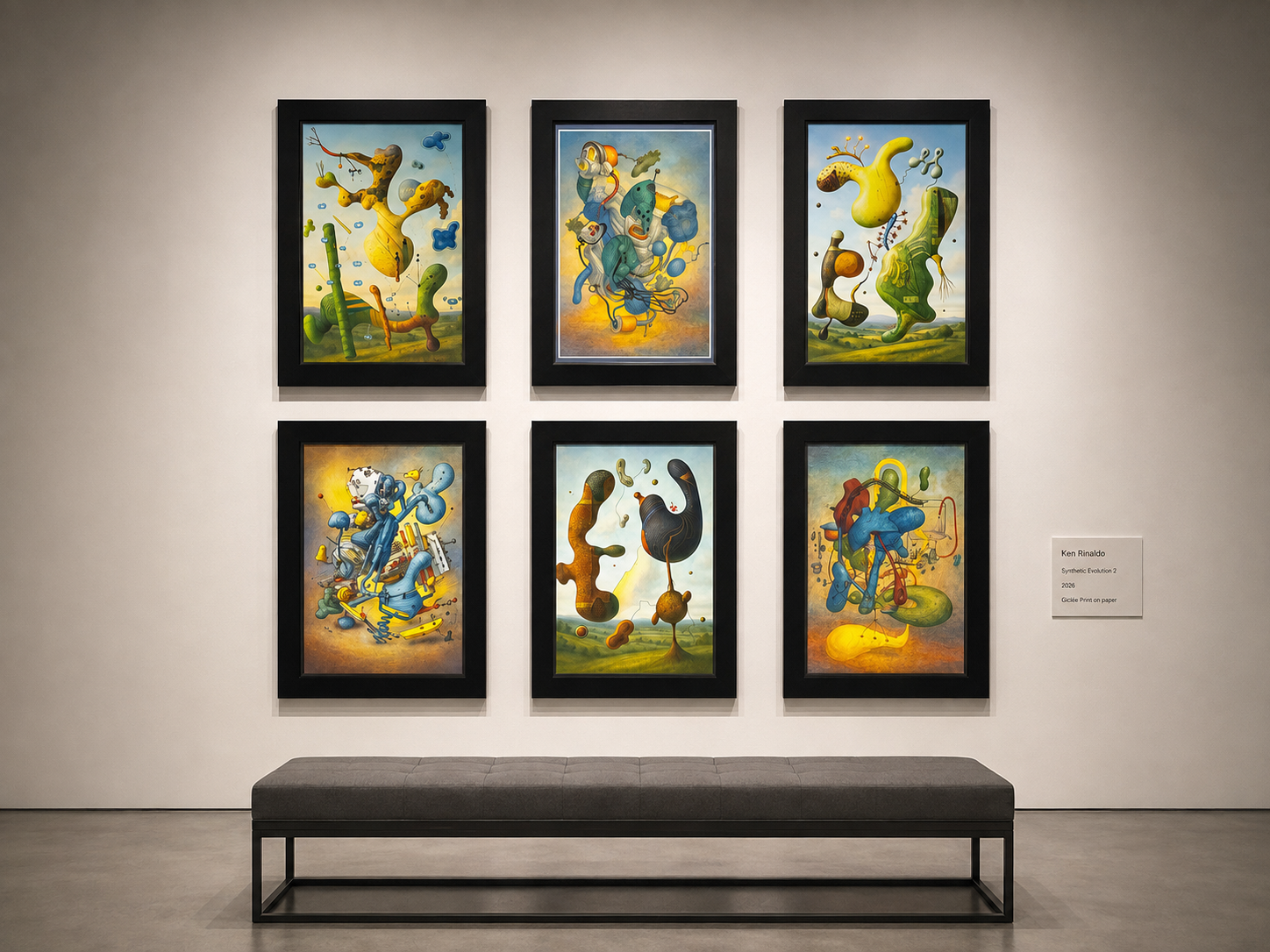
Synthetic Evolution 2 by Ken Rinaldo at the SP/N Gallery University of Dallas 2026 Curated by Dr Charissa Terranova
These AI-mediated transformations extend a practice that began with my early robotic generative artworks, where motors, sensors, machine logic, and diagrammatic systems were used to create interactive installations responsive to environmental and biological signals. In those earlier works, mechanical behavior functioned as a form of proto-intelligence—systems that sensed, reacted, and adapted in real time.
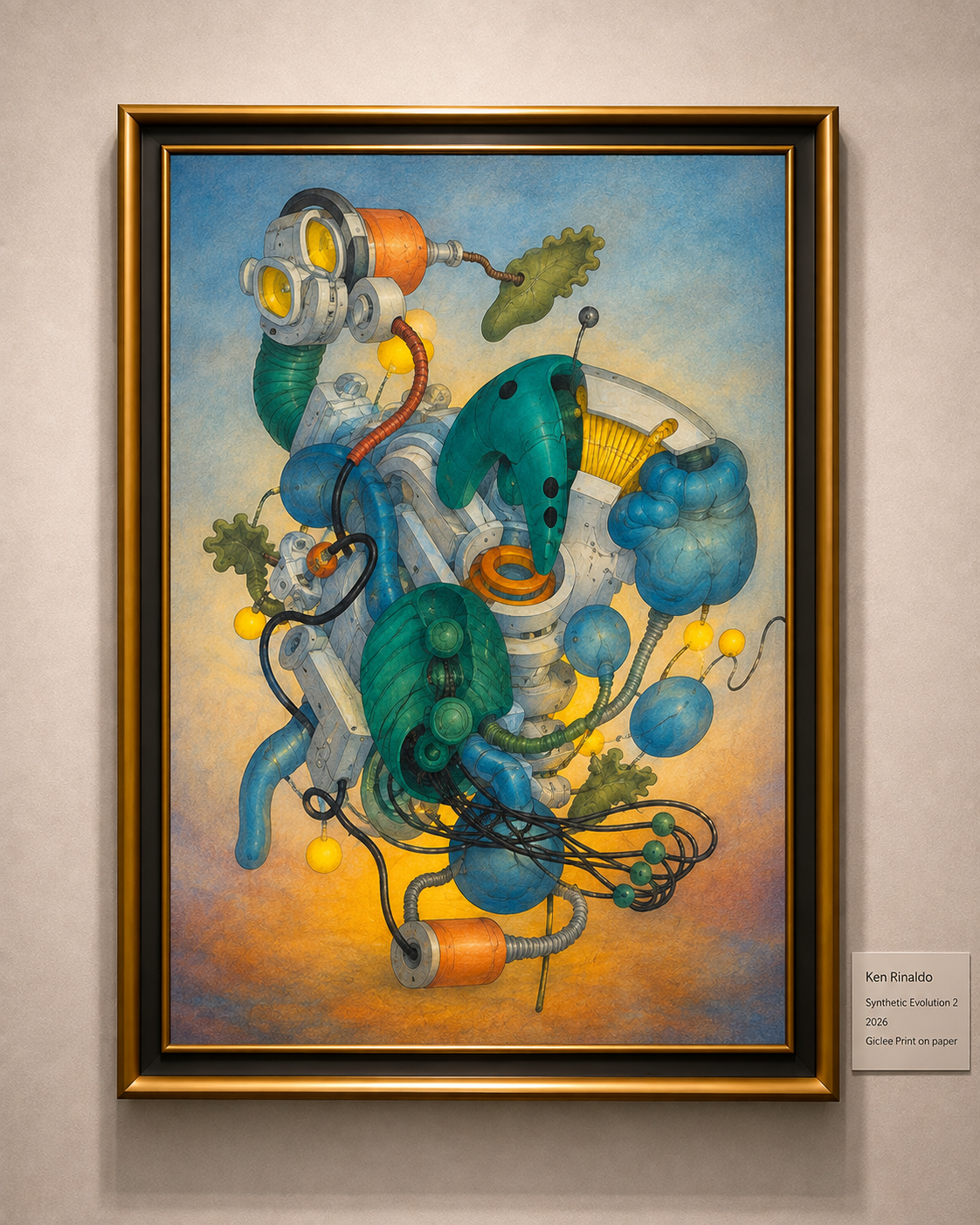
Over the past decades, I have increasingly merged machine schematics, electronic circuitry, and algorithmic diagrams with biological imagery, producing hybrid visual languages that oscillate between the engineered and the organic. These forms suggest speculative relationships between machines and living systems: sacs become organs or containers of agency, membranes imply permeability and exchange, motors echo muscular action, and vesicles operate as carriers of information and energy.
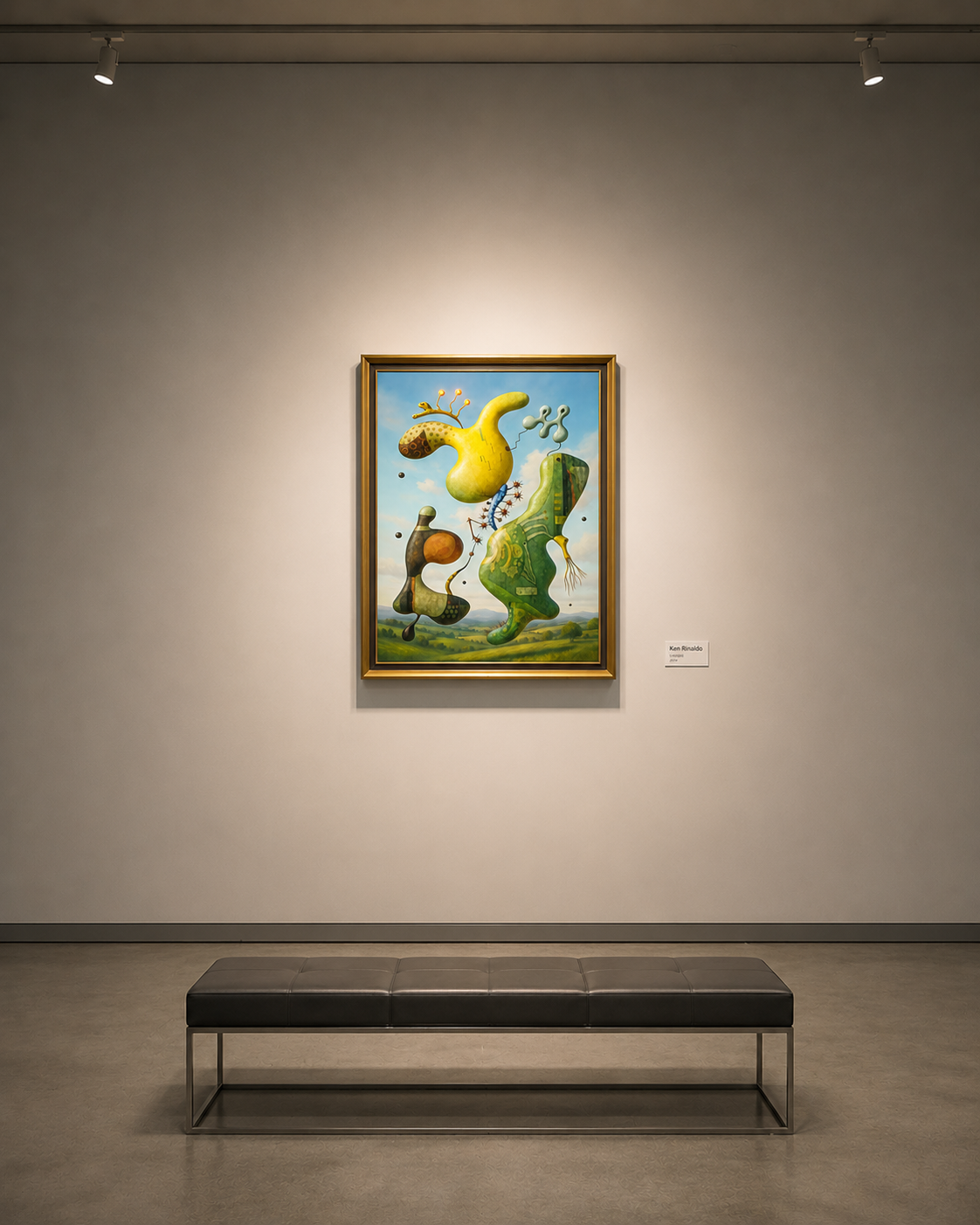
For Synthetic Evolution, I trained AI models on my hand-drawn works series, embedding constraints and rules that echo my longstanding compositional strategies.
These rules shape how forms may recombine, mutate, and propagate, allowing the AI to function less as a tool of automation and more as an evolutionary collaborator.
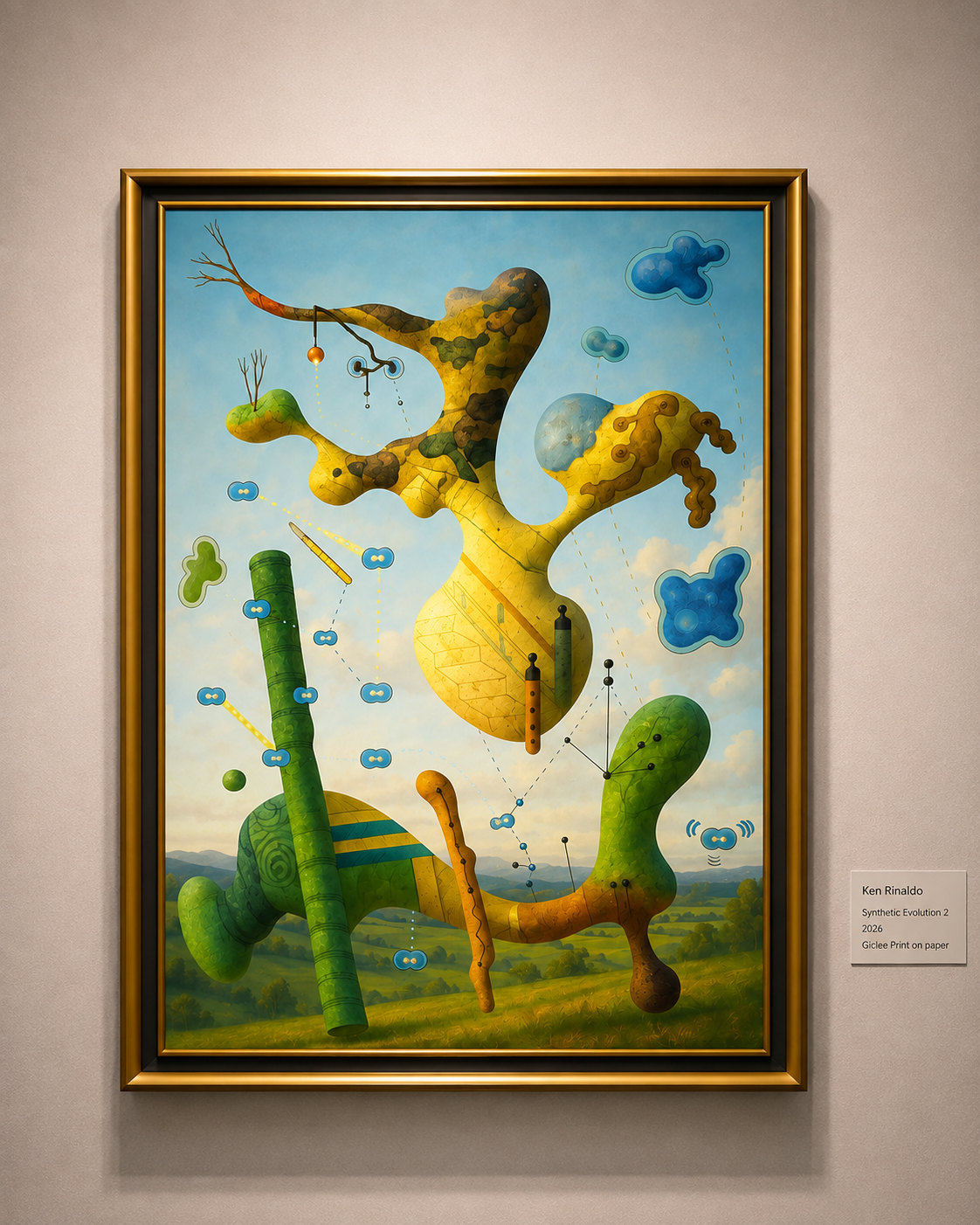
Because the source material is deliberately abstract and suggestive, the AI-generated outputs preserve this indeterminacy; however, the linguistic prompts introduced into the system often redirect the imagery toward unexpected figurative, ecological, or anatomical readings. Language here operates as a selective pressure, nudging visual evolution toward new territories.
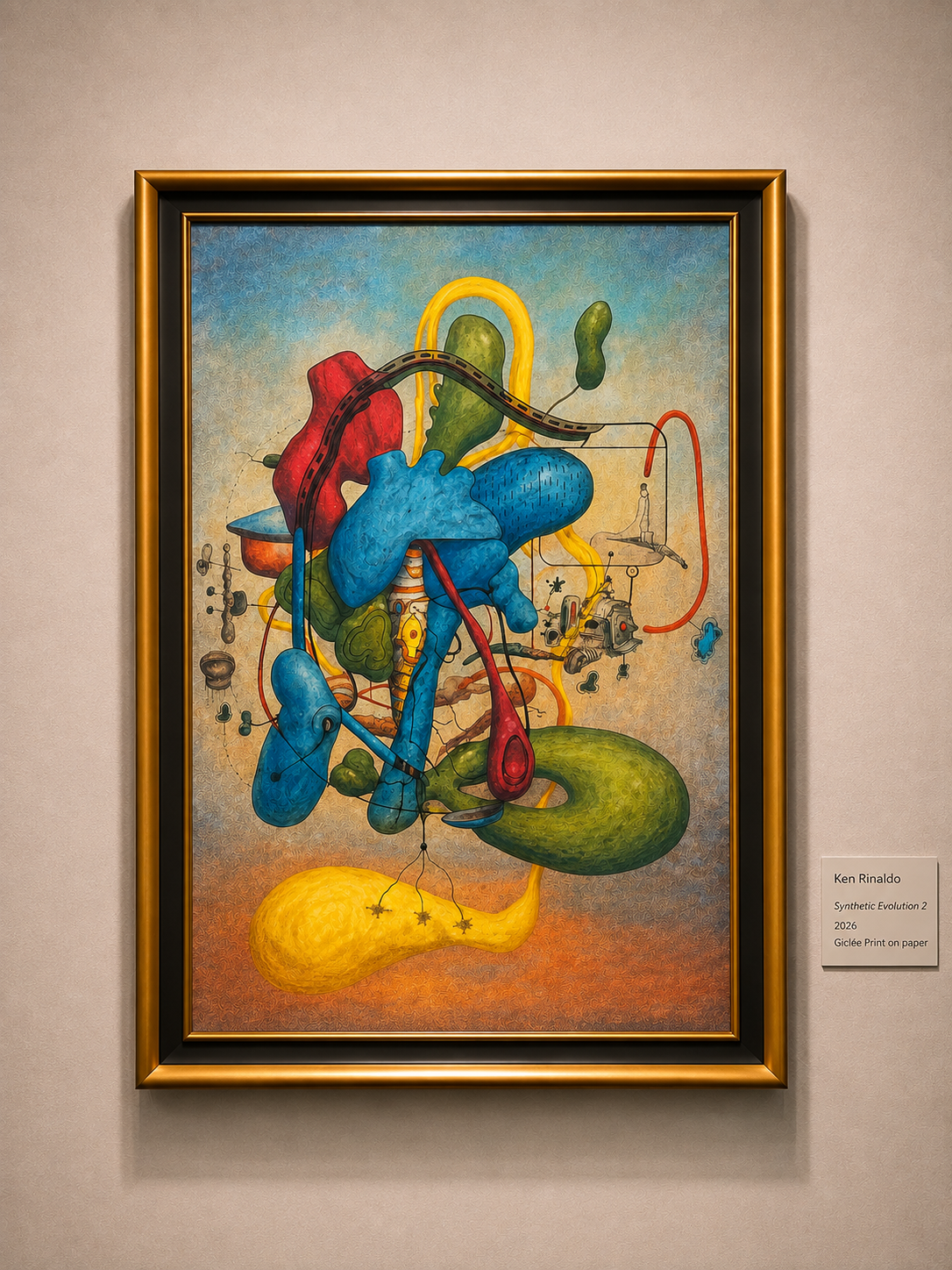
Through iterative refinement, I curate and rework the most compelling AI-generated results—altering color, density, scale, and spatial relationships—reasserting the artist’s hand while honoring the agency of the system.
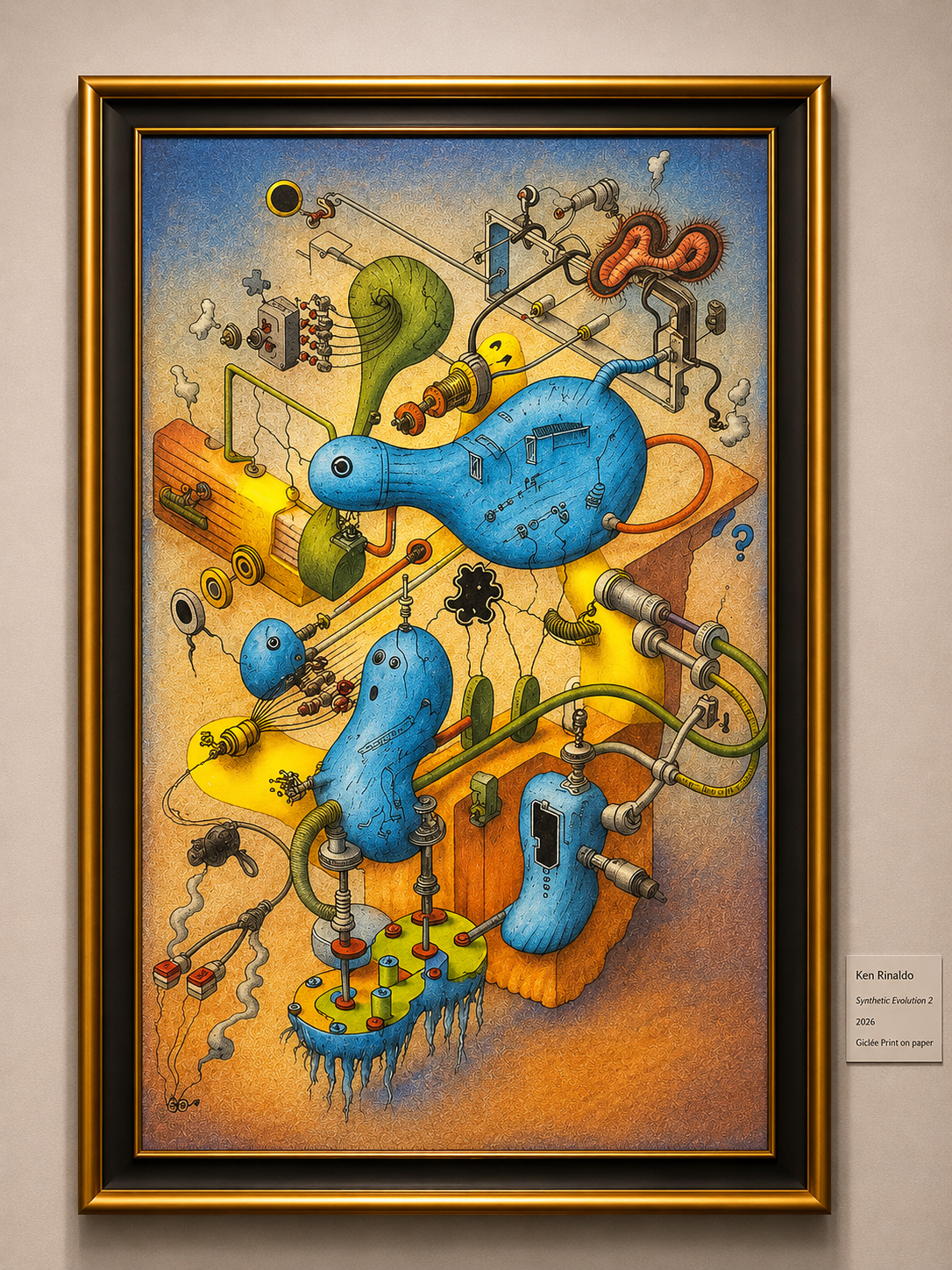
The resulting works occupy a liminal zone between authorship and emergence, intuition and computation.
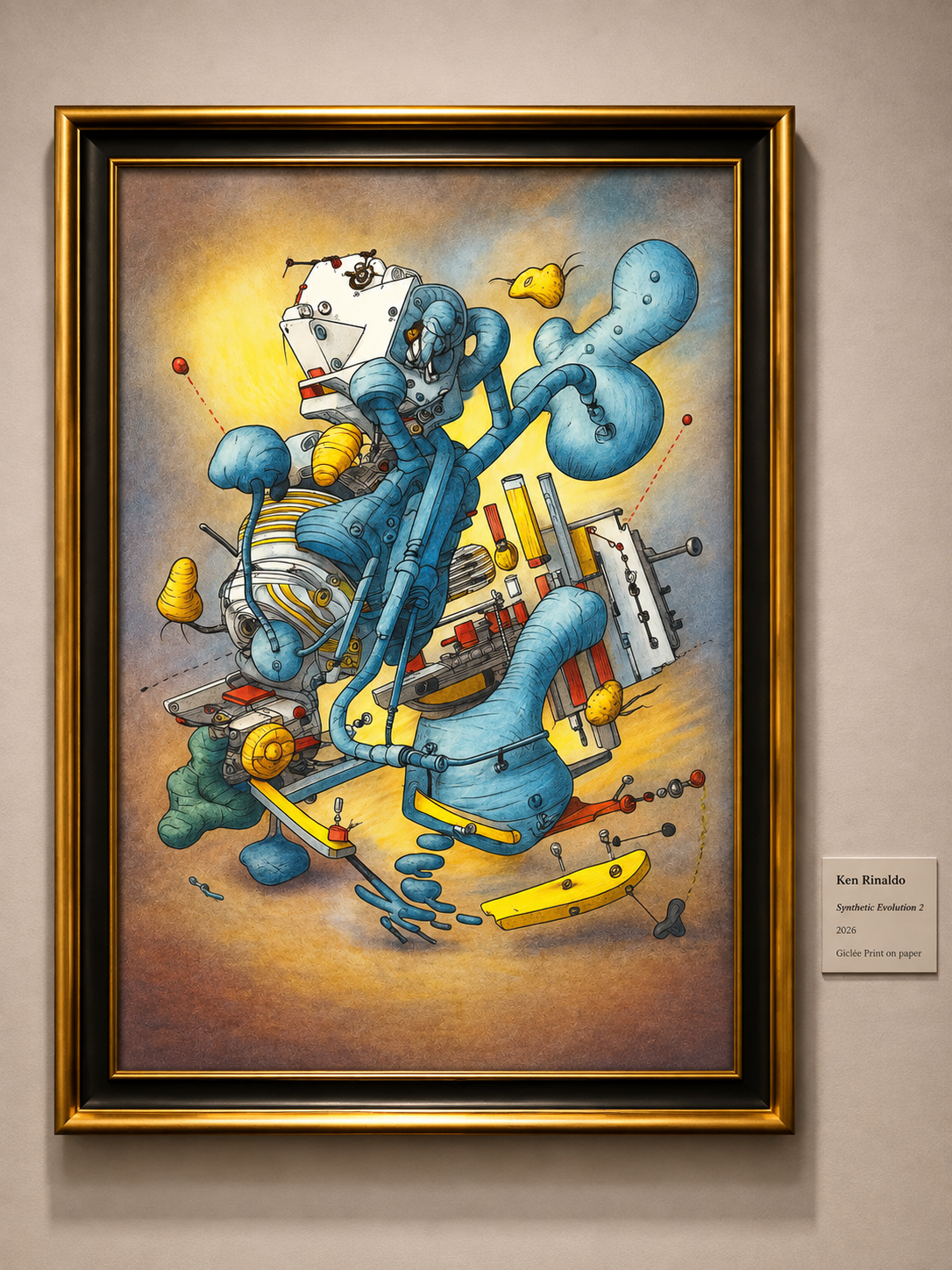
Synthetic Evolution ultimately proposes AI not as a replacement for creative labor, but as a living, semi-autonomous system embedded within a broader continuum of biological, technological, and cultural evolution.
Exhibitions
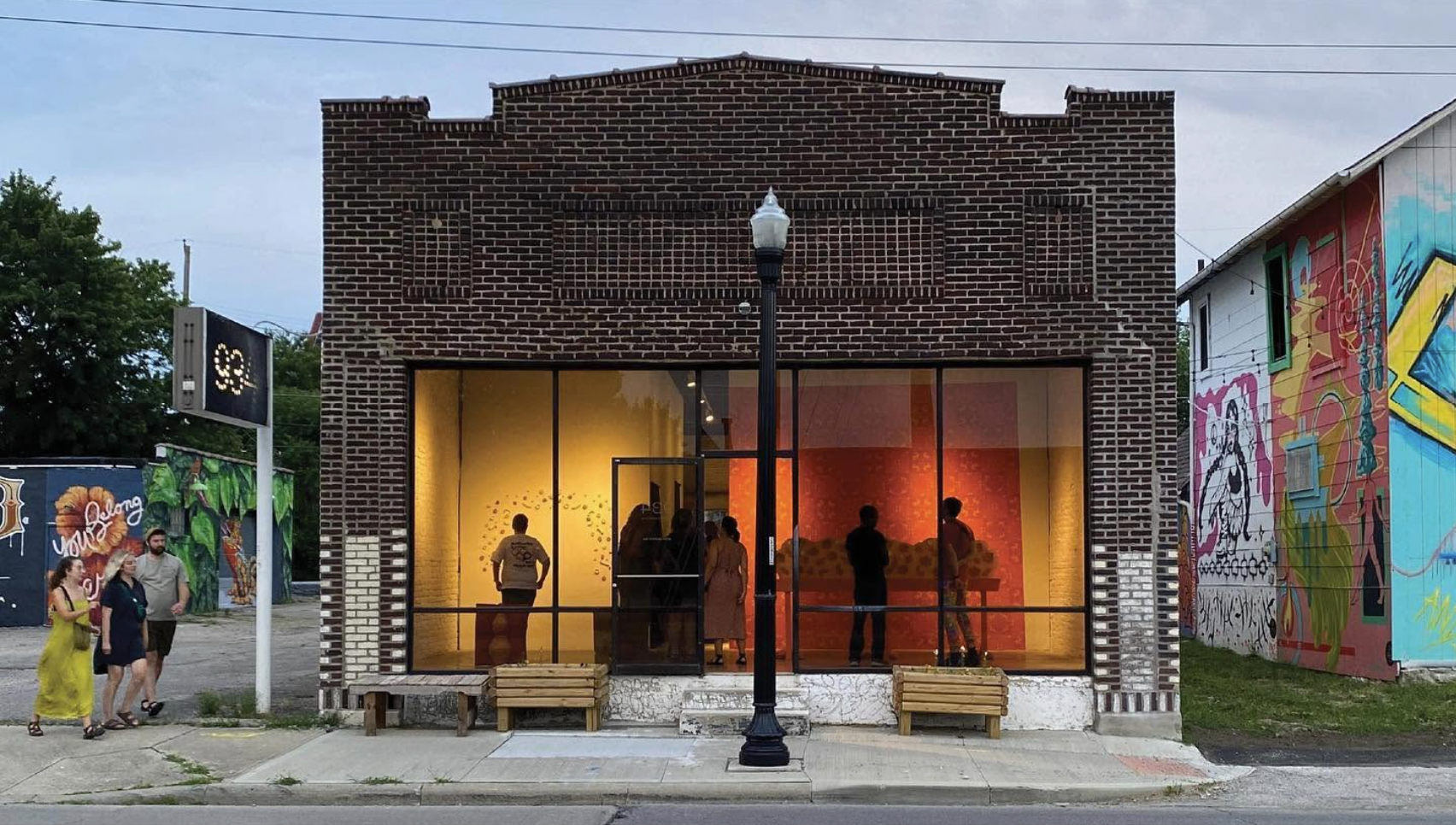
934 GALLERY Columbus, Ohio, Nov 21- Dec 13, 2025
Showing Synthetic Evolution prints and videos, Organic Murmuration prints and videos & SIGNS, Invited by Gallery Staff.
SP/N GALLERY Dallas, Texas, Feb 7-Apr 25, 2026
Organic Worlds: Symbiogenesis in Art presents the World wide premiere of Symbiogenesis, and Anicca Antennae-Soil as Brain; robotic beings, as avatars to insects, soil and bacteria as well as The Evolution of Information = Life, Organic Murmurations, 1-SIGN, 3 Story Robots 3D Animation, a two person exhibition with Amy Youngs. Invited commissioned by Professor Dr Charissa Terranova.